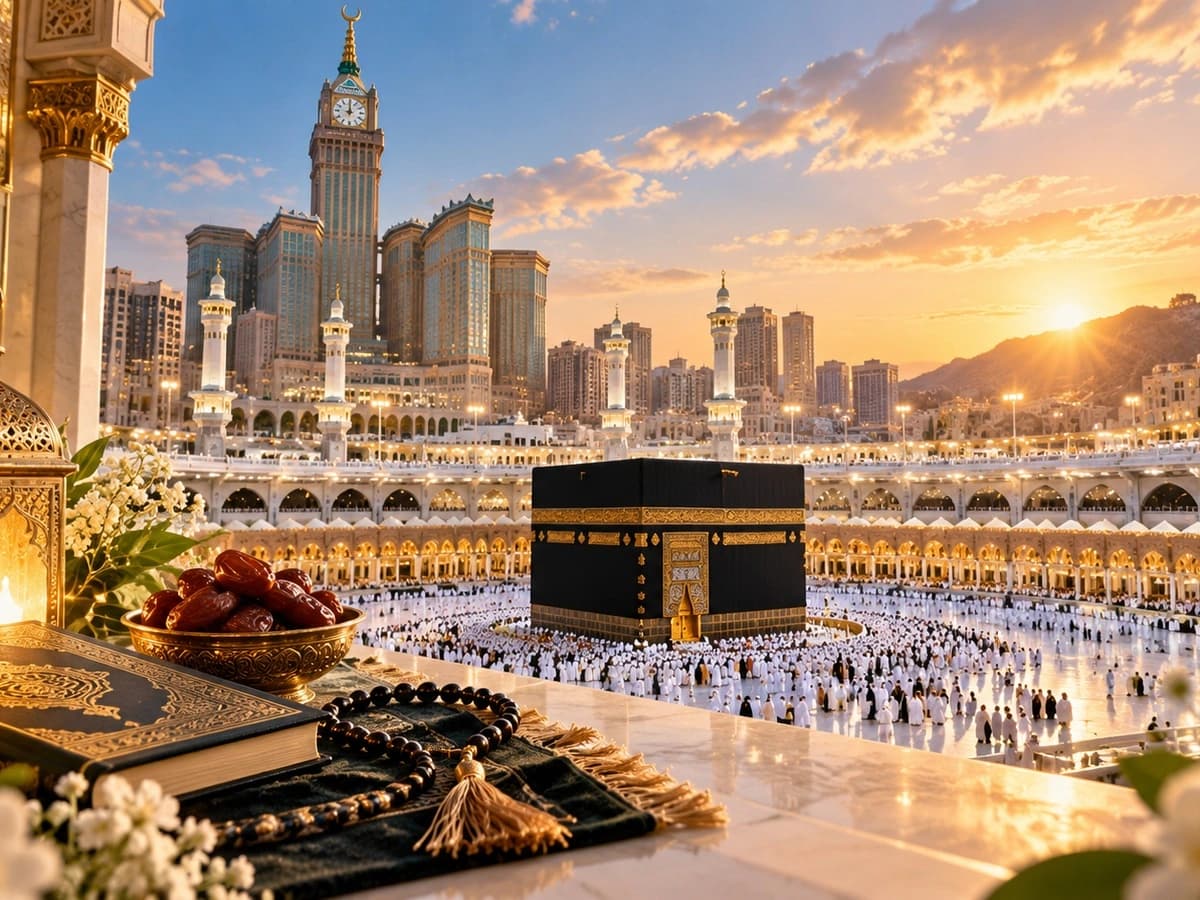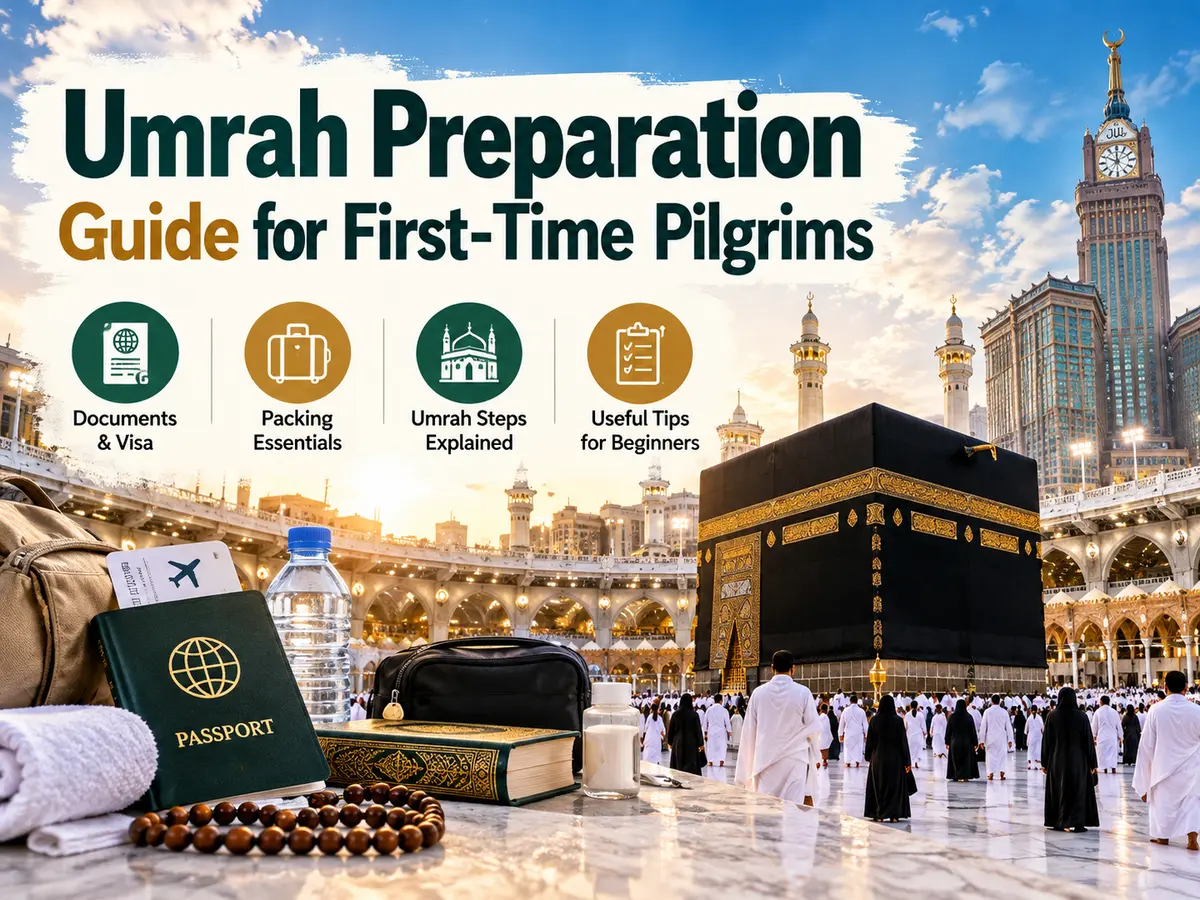

Performing Umrah is a meaningful spiritual journey for Muslims around the world. Whether you are travelling to Makkah for the first time or returning after several years, preparing properly can help you focus on worship and complete the pilgrimage with greater confidence.
This guide covers essential Umrah preparations, travel documents, packing recommendations, important rituals, and practical advice for first-time pilgrims.
What Is Umrah in Islam?
Umrah is an Islamic pilgrimage performed in Makkah, Saudi Arabia. Unlike Hajj, which takes place during specific days of Dhul Hijjah, Umrah can generally be performed throughout the year, subject to applicable pilgrimage regulations.
وَأَتِمُّوا الْحَجَّ وَالْعُمْرَةَ لِلَّهِ
“And complete the Hajj and 'umrah for Allah.”
— Surah Al-Baqarah (2:196)
The main rituals of Umrah include:
Ihram: Entering the sacred state of pilgrimage with the intention of performing Umrah.
Tawaf: Walking around the Kaaba seven times.
Sa'i: Walking seven lengths between Safa and Marwah.
Halq or Taqsir: Shaving or shortening the hair to complete Umrah.
Understanding these rituals before travelling can help pilgrims avoid confusion during their journey.
Essential Umrah Preparation Checklist
Before leaving for Saudi Arabia, pilgrims should organise their travel arrangements and personal essentials.
Travel Documents
Make sure you have the following:
A valid passport meeting Saudi entry requirements.
An appropriate visa or entry permission.
Confirmed flight and accommodation details.
Any required vaccination certificates.
Copies of important travel documents.
Emergency contact information.
Visa, health, and entry requirements may change. Always confirm the latest rules through official Saudi government sources before travelling.
What to Pack for Umrah
Packing carefully can make your pilgrimage more comfortable.
Item | Purpose | Recommendation |
|---|---|---|
Ihram clothing | Required attire for men in Ihram | Pack a spare set |
Comfortable footwear | Walking during the pilgrimage | Choose suitable, permitted footwear |
Small travel bag | Carrying daily essentials | Lightweight and easy to manage |
Unscented toiletries | Personal hygiene during Ihram | Check applicable Ihram restrictions |
Reusable water bottle | Staying hydrated | Carry during permitted activities |
Personal medication | Managing individual health needs | Keep in original packaging |
Phone charger | Communication and navigation | Bring a suitable adapter |
Prayer mat | Optional personal convenience | Choose a lightweight design |
How to Perform Umrah Step by Step
Understanding the correct sequence of Umrah rituals is important for every pilgrim.
"“The performance of 'Umrah is an expiation for the sins committed between it and the previous one.”"
— Sahih al-Bukhari 1773 · Grade: Sahih
Step 1: Enter the State of Ihram
Before crossing the designated Miqat boundary, pilgrims intending Umrah must enter Ihram.
Men wear the prescribed Ihram clothing, while women wear modest clothing that meets Islamic requirements.
Pilgrims make their intention for Umrah and begin reciting the Talbiyah.
Step 2: Perform Tawaf Around the Kaaba
After arriving at Masjid al-Haram, pilgrims perform Tawaf by completing seven circuits around the Kaaba.
Each circuit begins and ends at the alignment of the Black Stone.
Pilgrims should:
Maintain a calm and respectful manner.
Avoid pushing or harming other worshippers.
Make personal supplications and remember Allah.
Follow the designated walking routes and official instructions.
Step 3: Perform Sa'i Between Safa and Marwah
After Tawaf and the associated prayer, pilgrims proceed to Safa and Marwah to perform Sa'i.
Sa'i consists of seven lengths between the two hills.
The journey from Safa to Marwah counts as one length, and the return from Marwah to Safa counts as the second. The seventh length ends at Marwah.
Step 4: Complete Umrah by Cutting the Hair
After completing Sa'i, men shave or shorten their hair, while women trim a small portion of their hair according to the applicable religious guidance.
This completes the main Umrah rituals and allows pilgrims to leave the state of Ihram.
Umrah Rituals at a Glance
Ritual | Main Activity | Important Detail |
|---|---|---|
Ihram | Enter the sacred state | Before crossing Miqat |
Tawaf | Circle the Kaaba | Seven circuits |
Sa'i | Walk between Safa and Marwah | Seven lengths |
Halq or Taqsir | Shave or shorten hair | Completes Umrah |
Practical Tips for First-Time Umrah Pilgrims
A little preparation can make the journey easier, particularly during busy pilgrimage periods.
Learn the rituals in advance. Familiarise yourself with the sequence of Ihram, Tawaf, Sa'i, and hair cutting.
Stay hydrated. Drink sufficient water, especially during hot weather.
Choose suitable accommodation. Consider walking distance, transport availability, and accessibility.
Keep important documents secure. Store digital copies separately from the originals.
Respect other pilgrims. Avoid rushing, pushing, or blocking busy pathways.
Plan rest periods. Allow sufficient time for recovery between activities.
A Gentle Reminder for Pilgrims
Umrah is an opportunity to strengthen your connection with Allah. During Tawaf and Sa'i, remain patient, avoid pushing others, and focus on sincere worship. Respect fellow pilgrims, especially elderly people and those who need assistance.
Common Mistakes to Avoid During Umrah
First-time pilgrims sometimes experience difficulties because of limited preparation.
Common mistakes include:
Crossing Miqat without entering Ihram when required.
Confusing seven Sa'i lengths with seven return journeys.
Using prohibited scented products while in Ihram.
Following crowds without understanding the ritual sequence.
Carrying excessive luggage into crowded prayer areas.
Ignoring official safety instructions.
Learning about these issues beforehand can help pilgrims perform Umrah with greater confidence.
Preparing for a Meaningful Umrah Journey
Preparing for Umrah involves more than arranging flights and accommodation. Understanding the rituals, organising essential documents, and planning for personal comfort can help pilgrims concentrate on the spiritual purpose of their journey.
By learning the main steps of Umrah and following reliable religious guidance, first-time pilgrims can approach their pilgrimage with confidence, patience, and devotion.