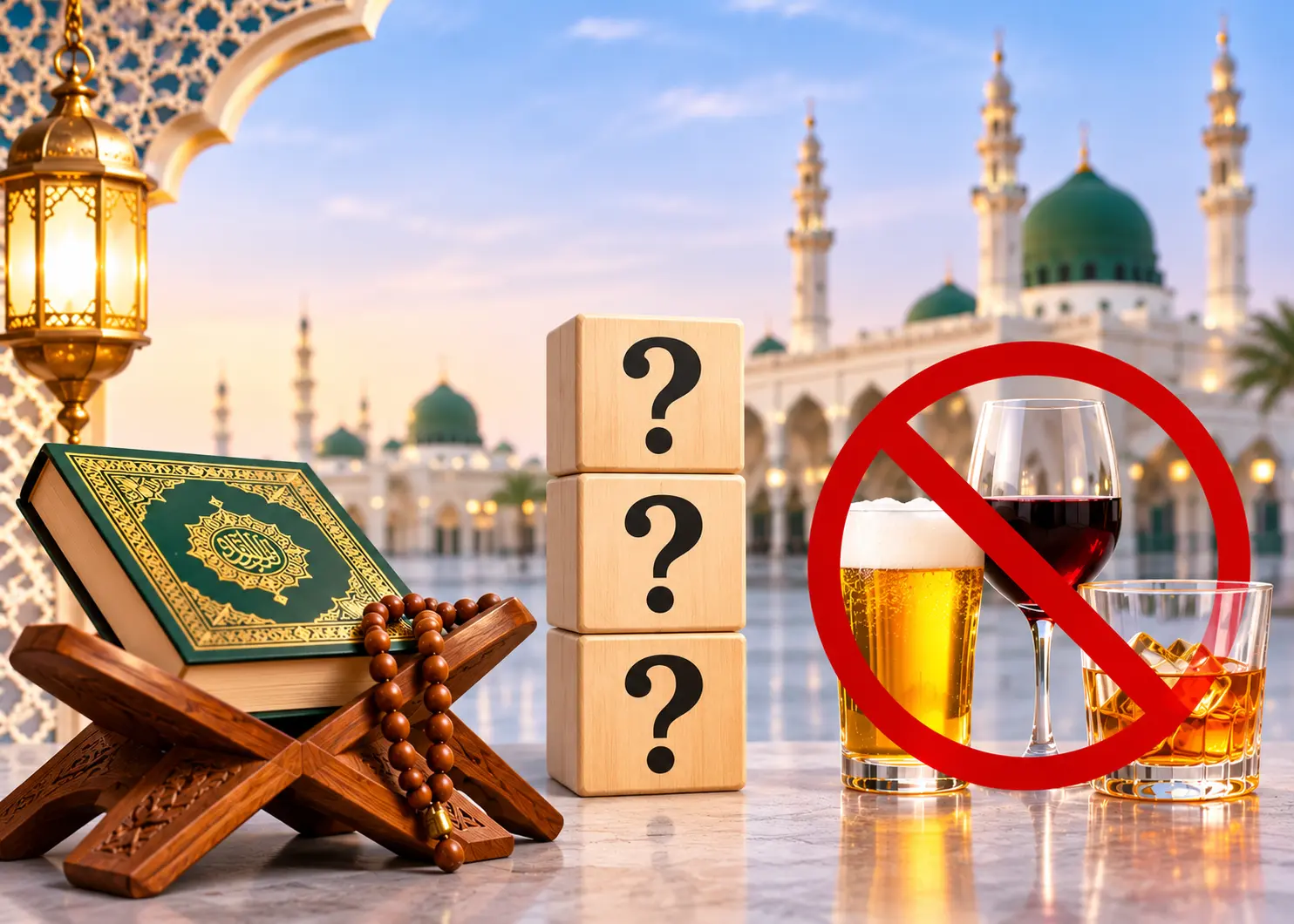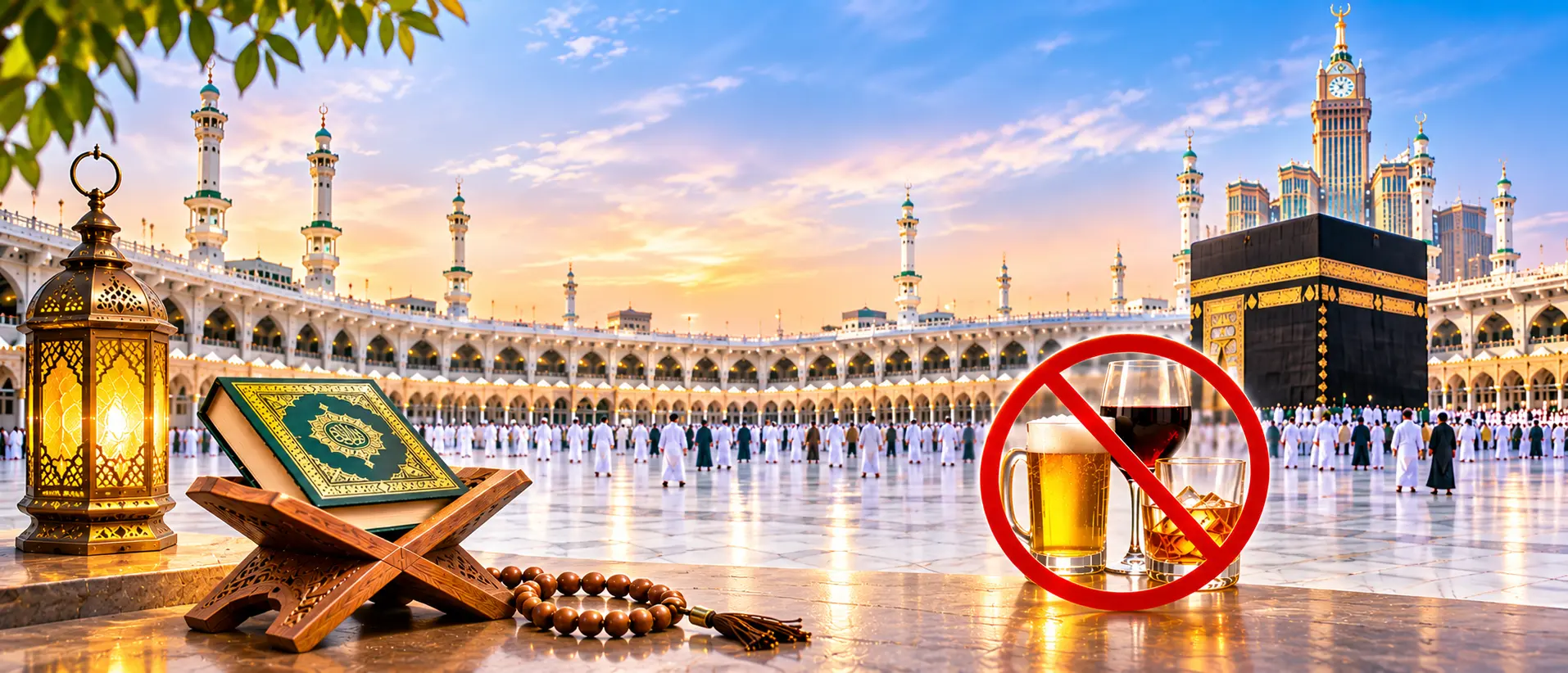

No, Muslims are not permitted to drink intoxicating alcohol under Islamic law. The Quran prohibits intoxicants in Surah Al-Ma'idah (5:90–91), and Prophet Muhammad (peace be upon him) taught that every intoxicant is forbidden. This ruling applies to alcoholic beverages such as beer, wine, and liquor, even when consumed without the intention of becoming drunk.
Islam's prohibition of alcohol is based on religious teachings about obedience to Allah, protecting judgment, maintaining healthy relationships, and preserving the ability to worship responsibly.
However, Islamic teachings and individual behavior are not always identical. Some Muslims consume alcohol despite the prohibition, while others abstain completely. Understanding this distinction helps explain both the religious ruling and the diversity of Muslim communities.
Is Alcohol Haram in Islam?
Yes. Alcoholic beverages that cause intoxication are considered haram, meaning prohibited, in Islam.
The Quran uses the Arabic word khamr, traditionally associated with wine and intoxicating drinks. Islamic teachings extend the prohibition beyond grape wine to other substances that cause intoxication.
Two primary sources support the ruling:
The Quran: Surah Al-Ma'idah (5:90–91) instructs believers to avoid intoxicants.
The Sunnah: Prophet Muhammad (peace be upon him) prohibited intoxicating substances, regardless of their source.
What Does the Quran Say About Alcohol?
Surah Al-Ma'idah (5:90) identifies intoxicants alongside gambling and certain prohibited pre-Islamic practices, instructing believers to avoid them.
The following verse, 5:91, explains that intoxicants and gambling can create hostility between people and distract them from remembering Allah and performing prayer.
These verses establish that the Islamic prohibition is not limited to drinking excessively or becoming visibly intoxicated. The command concerns intoxicating substances themselves.
Quranic references:
What Did Prophet Muhammad Say About Intoxicants?
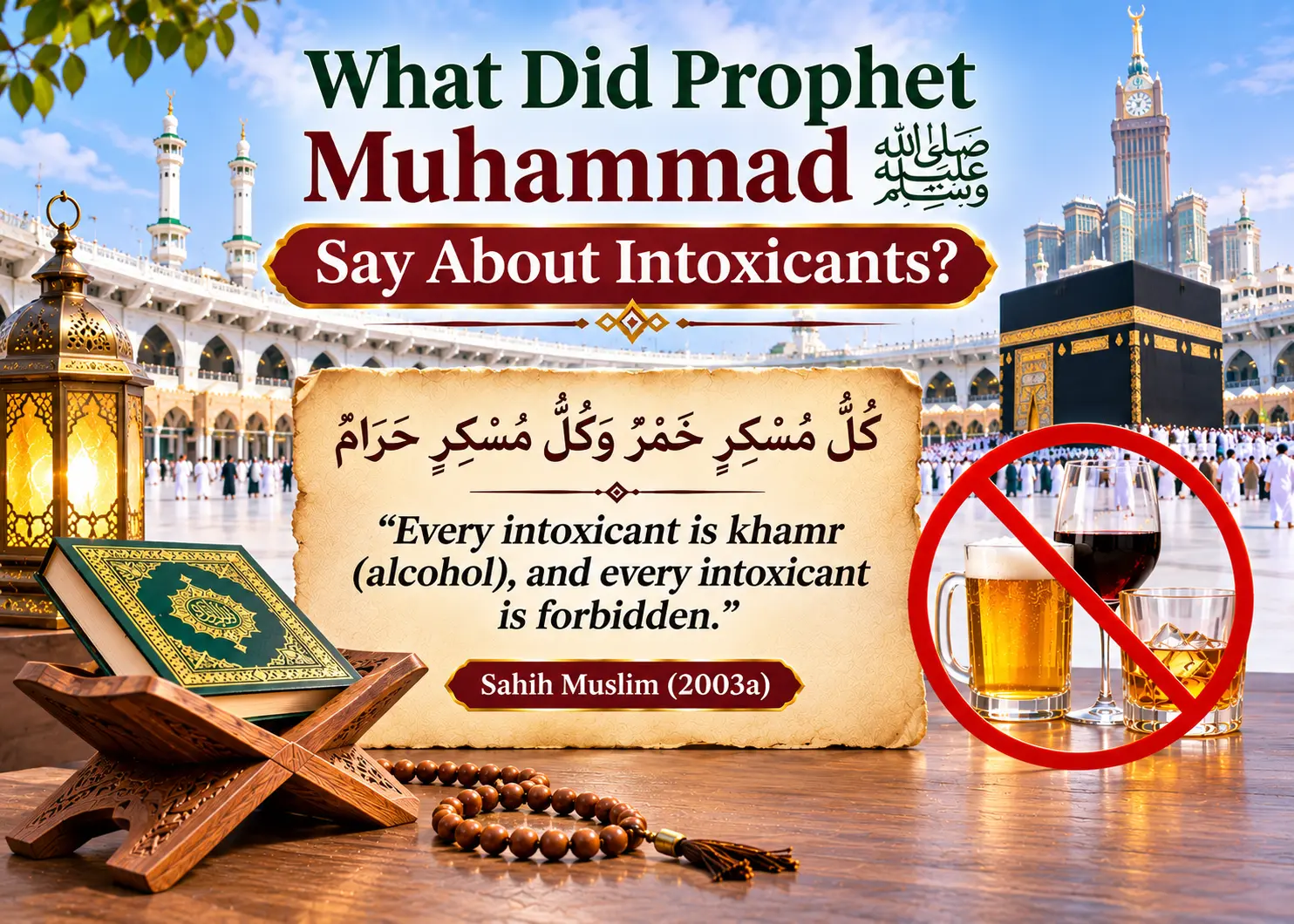
Prophet Muhammad (peace be upon him) taught that the prohibition applies to intoxicants generally, not just one particular type of drink.
In Sunan Abi Dawud 3679, a narration from Abdullah ibn Umar reports that every intoxicant is classified as khamr and that intoxicants are forbidden.
This establishes an important principle: the Islamic ruling depends on a substance's intoxicating nature, not simply its name, ingredients, or cultural origin.
Hadith reference: Sunan Abi Dawud 3679
Why Are Muslims Not Allowed to Drink Alcohol?
Muslims avoid intoxicating alcohol primarily because Allah has prohibited it. The Quran also identifies consequences associated with intoxicants, particularly their potential to damage relationships and interfere with religious responsibilities.
1. Alcohol Can Interfere With Prayer and Remembrance of Allah
Muslims perform five obligatory daily prayers. These prayers require awareness, intention, and the ability to understand the recitation.
Surah Al-Ma'idah (5:91) identifies distraction from Allah's remembrance and prayer as consequences associated with intoxicants.
For Muslims, avoiding intoxication helps preserve the attention and self-control necessary for worship.
2. Intoxicants Can Create Conflict Between People
The same Quranic verse identifies hostility and hatred as consequences associated with intoxicants and gambling.
Alcohol can impair judgment and influence behavior, potentially contributing to arguments, irresponsible decisions, and damaged relationships.
Islam emphasizes maintaining family ties, fulfilling responsibilities, and treating others fairly. The prohibition of intoxicants supports these broader ethical principles.
3. Islam Emphasizes Responsibility and Self-Control
Islamic teachings encourage believers to exercise discipline over their actions and desires.
Intoxication can interfere with a person's ability to evaluate decisions and recognize consequences. Abstaining from intoxicants is therefore consistent with Islamic principles of accountability and responsible conduct.
4. Avoiding Alcohol Is an Act of Religious Obedience
Although people often discuss alcohol in terms of health or social consequences, the foundation of its prohibition in Islam is religious.
A Muslim does not need to experience the harmful effects of alcohol personally for the ruling to apply.
Following Allah's command is itself a central reason for abstaining.
Did Islam Prohibit Alcohol All at Once?
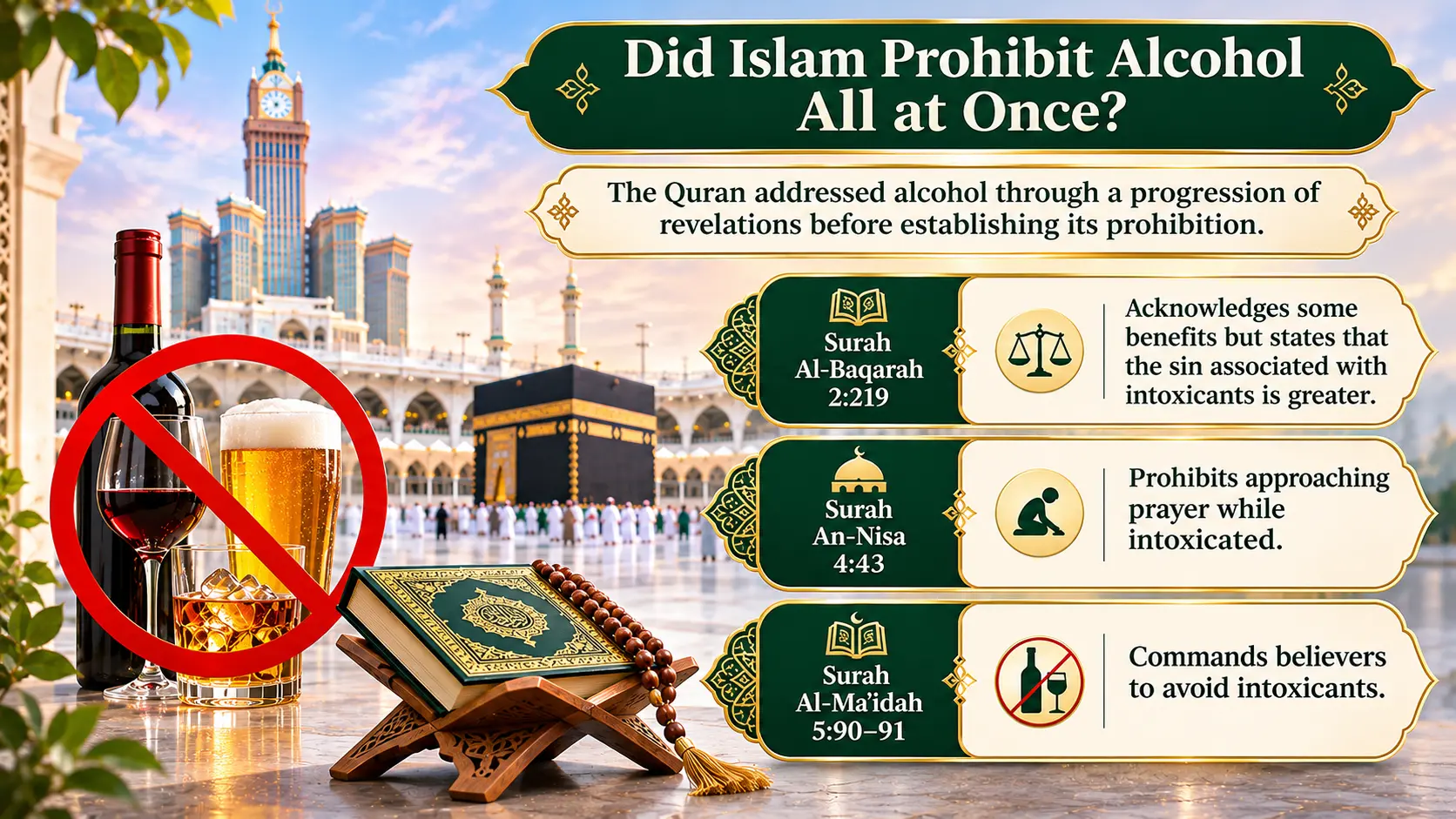
The Quran addressed alcohol through a progression of revelations before establishing its prohibition.
Three passages are especially important for understanding this development.
Quranic verse | Teaching about alcohol | Significance |
Al-Baqarah 2:219 | Acknowledges some benefits but states that the sin associated with intoxicants is greater | Draws attention to the moral consequences |
An-Nisa 4:43 | Prohibits approaching prayer while intoxicated | Establishes a restriction connected to worship |
Al-Ma'idah 5:90–91 | Commands believers to avoid intoxicants | Establishes the prohibition |
First Stage: Recognizing the Harm of Alcohol
Surah Al-Baqarah (2:219) discusses intoxicants and gambling, acknowledging that people may find some benefits in them while emphasizing that their sin is greater.
The verse highlights the moral weight of these practices rather than treating their perceived benefits as sufficient justification.
Second Stage: Prohibiting Prayer While Intoxicated
Surah An-Nisa (4:43) instructs believers not to approach prayer while intoxicated until they understand what they are saying.
This restriction highlights the importance of mental awareness during worship.
It was not yet the final, comprehensive prohibition of intoxicating drinks.
Third Stage: The Prohibition of Intoxicants
Surah Al-Ma'idah (5:90–91) instructs believers to avoid intoxicants and identifies their potential to create hostility and interfere with prayer.
These verses provide the principal Quranic foundation for the prohibition of alcohol in Islam.
Islamic scholarship commonly discusses the progression of these passages as an example of how the Quran addressed an established social practice through successive revelations.
Do Muslims Drink Alcohol?
Islam prohibits intoxicating alcohol, but some Muslims still drink it. Religious rules describe what Islam permits or forbids; they do not guarantee that every person who identifies as Muslim follows every teaching.
Muslim communities exist across different countries, cultures, and social environments. Individual religious practice can vary.
It is therefore inaccurate to claim that every Muslim abstains from alcohol or that drinking alcohol is permitted simply because some Muslims do it.
Do All Muslims Avoid Alcohol?
No. Not every Muslim abstains from alcohol in practice.
Some Muslims follow the prohibition strictly, while others may consume alcohol despite knowing that it is prohibited.
A person's behavior does not change the underlying religious ruling.
Why Do Some Muslims Drink Alcohol Despite the Prohibition?
There is no single explanation for why an individual Muslim might consume alcohol.
Possible influences include:
Personal choices and varying levels of religious observance.
Social environments where alcohol consumption is common.
Cultural practices and individual circumstances.
Difficulty changing established drinking habits.
These possibilities should not be used to make assumptions about particular individuals or nationalities.
Are Alcohol Rules Different for Sunni and Shia Muslims?
Both Sunni and Shia Islamic traditions prohibit intoxicating alcoholic drinks.
Although schools of Islamic jurisprudence may differ on certain ingredients, fermentation processes, or exceptional circumstances, both traditions generally prohibit intoxicating beverages.
Therefore, it would be incorrect to suggest that one major Islamic tradition generally permits drinking wine or liquor while another prohibits it.
Can Muslims Drink Beer, Wine, or Small Amounts of Alcohol?
Islam prohibits intoxicating alcoholic beverages, whether they are sold as beer, wine, champagne, whiskey, vodka, or other types of liquor. The ruling is not based on a drink's brand, price, or cultural popularity. Its intoxicating properties are the key consideration.
Prophet Muhammad (peace be upon him) also taught that if a substance intoxicates in large quantities, a small quantity of it is forbidden. This teaching is reported in Sunan Abi Dawud 3681.
Can Muslims Drink Beer?
Regular alcoholic beer is prohibited in Islam because it contains intoxicating alcohol.
Drinking beer socially, at a celebration, or without intending to become drunk does not make it permissible.
Alcohol-free and non-alcoholic beers require a separate assessment because their ingredients, manufacturing methods, and residual alcohol content can differ.
Can Muslims Drink Wine?
No. Conventional alcoholic wine is prohibited in Islam.
The ruling applies to red wine, white wine, sparkling wine, and other intoxicating wines.
The Quran's prohibition of intoxicants is not limited to a particular type of alcoholic beverage.
Is Drinking a Small Amount of Alcohol Allowed?
A small serving of an intoxicating beverage does not become permissible simply because the person is unlikely to become drunk.
The prophetic teaching about substances that intoxicate in large amounts addresses this distinction.
However, the legal treatment of trace alcohol in foods, medicines, and other products involves additional questions. These should not automatically be treated as identical to intentionally drinking an alcoholic beverage.
Can Muslims Drink Non-Alcoholic Beer or Wine?
The permissibility of non-alcoholic beer and wine requires more careful consideration than the ruling on conventional alcoholic drinks.
Products labeled non-alcoholic, alcohol-free, and 0.0% alcohol may differ in their actual alcohol content, production methods, and ingredients.
Islamic scholars and halal certification organizations do not necessarily apply identical standards to every product.
Before choosing a beverage, Muslims may wish to consider:
Whether the product contains any residual alcohol.
Whether it was produced as an intoxicating beverage and later dealcoholized.
Whether other ingredients raise halal concerns.
Whether a recognized halal certification or reliable scholarly ruling applies to that specific product.
Is 0.0% Beer Automatically Halal?
Not necessarily.
A 0.0% label can help establish a product's stated alcohol content, but it does not settle every religious question associated with its manufacturing process or classification.
Some scholars and certification bodies may accept particular products, while others take a more restrictive approach.
For a product-specific ruling, consult a qualified scholar or reliable halal certification authority.
What About Kombucha and Other Fermented Drinks?
Fermented beverages require individual assessment because fermentation can produce alcohol, and the amount may vary between products.
Kombucha, kefir, and similar drinks should not all be classified together without considering their ingredients, alcohol content, and applicable scholarly guidance.
The important distinction is between intentionally consuming an intoxicating drink and evaluating a food or beverage that may contain incidental or residual alcohol.
What Happens if a Muslim Drinks Alcohol?
Drinking intoxicating alcohol is a sin in Islam, but sinning does not automatically mean that a person is no longer Muslim.
Islam teaches personal accountability alongside the possibility of repentance and Allah's mercy.
A Muslim who has consumed alcohol should not assume that forgiveness is impossible.
Can Allah Forgive Someone Who Drinks Alcohol?
Yes. The Quran encourages those who have sinned not to despair of Allah's mercy.
Surah Az-Zumar (39:53) teaches that Allah forgives sins and calls people toward His mercy.
Sincere repentance generally involves:
Stopping the sinful action.
Feeling genuine remorse.
Resolving not to return to it.
Addressing any harm or violated rights where applicable.
Someone struggling with alcohol dependence may also need professional support. Seeking appropriate treatment is compatible with taking repentance and personal well-being seriously.
Quranic reference: Surah Az-Zumar 39:53
Can a Muslim Pray After Drinking Alcohol?
A Muslim remains responsible for the obligatory prayers.
The Quran explicitly prohibits approaching prayer while intoxicated until a person understands what they are saying (4:43).
Someone who has consumed alcohol should not deliberately abandon prayer. They should become sober, fulfill their religious obligations, and seek forgiveness.
Questions about missed prayers or the consequences of intoxication may require guidance from a qualified Islamic scholar.
What Can Muslims Drink Instead of Alcohol?
Muslims can enjoy a wide range of permissible beverages. Islam does not prohibit drinking generally; its prohibition concerns intoxicants and other specifically impermissible substances.
Examples of common non-intoxicating beverages include:
Beverage | General consideration |
Water | Permissible and essential for hydration |
Milk | Generally permissible |
Fresh fruit juice | Permissible when ingredients are halal |
Tea | Generally permissible |
Coffee | Generally permissible |
Sparkling water | A non-alcoholic alternative to celebratory drinks |
Mocktails | May be permissible when made with halal, non-intoxicating ingredients |
A drink's permissibility depends on what it actually contains, not simply whether it is marketed as a mocktail, energy drink, or specialty beverage.
For example, some cocktail mixers, flavorings, and extracts may require additional ingredient checks.